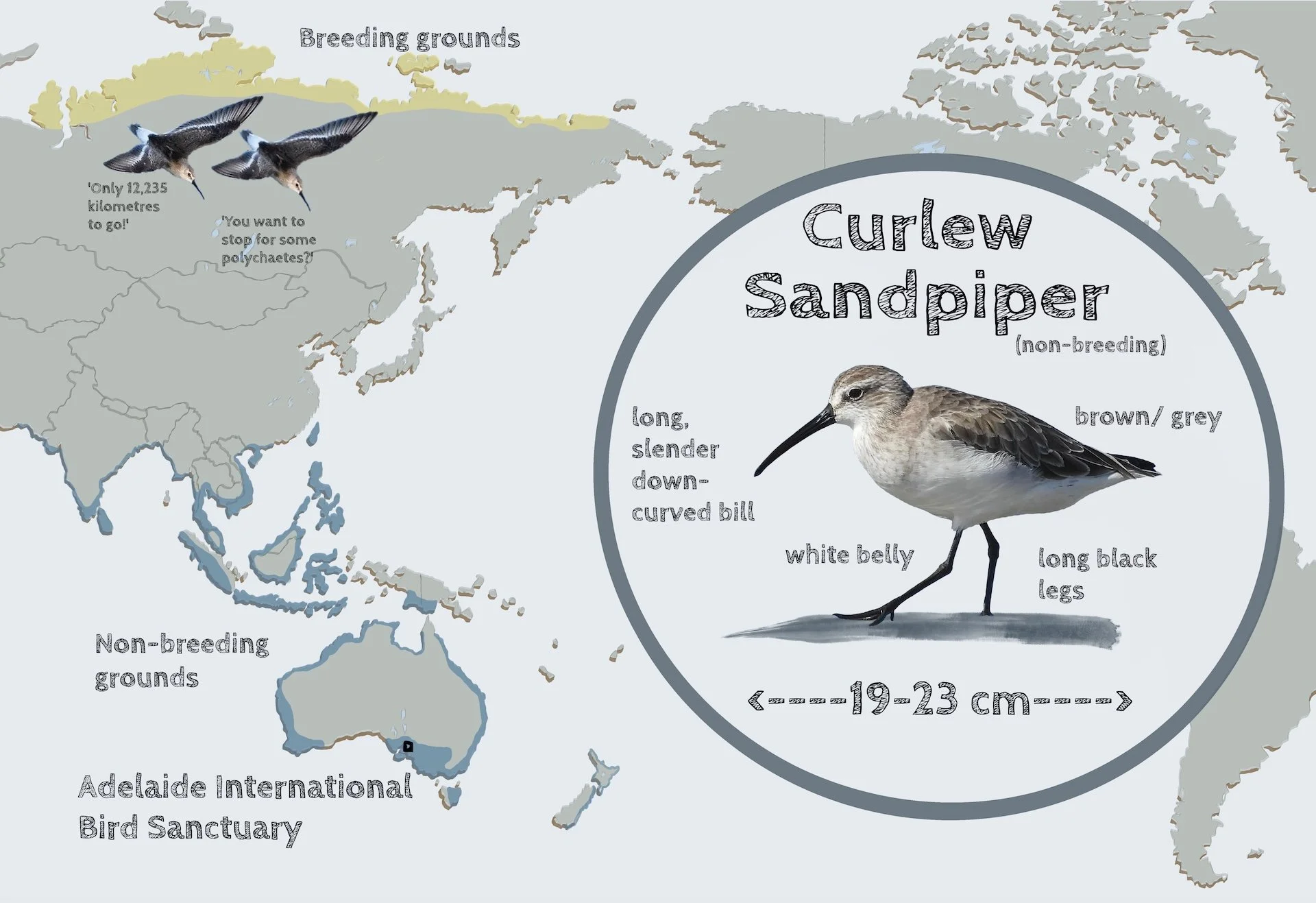
Curlew Sandpiper (Calidris ferruginea)
calidris: grey-coloured waterside bird
ferruginea: rust-coloured
The Curlew Sandpiper is a medium-sized sandpiper in the Scolopacidae family, measuring approximately 19–23 cm in length. Its most diagnostic features are a relatively long, fine black bill that curves downwards, long black legs and a streamlined body.
In non-breeding plumage, the upperparts are grey-brown and the belly predominantly white, with grey streaking across the breast; a prominent white rump and white wing-bar are visible in flight. Adults in breeding plumage develop rich chestnut-red underparts.
The species breeds on Arctic tundra in Siberia and migrates south through the East Asian–Australasian Flyway to non-breeding grounds in Australia. It favours intertidal mudflats, estuaries, coastal lagoons and saline wetlands, where it feeds primarily on polychaete worms and other small invertebrates. Its relatively long, decurved bill allows it to probe soft sediments for prey, feeding in shallow water with a characteristic rhythmic, bobbing movement of the head and body, often called a sewing machine movement. These specialised feeding adaptations enable it to exploit sediment zones and prey resources that may differ from those used by other co-occurring shorebirds such as the Red-necked Stint.
Conservation status:
Global (IUCN Red List): Vulnerable (VU)
Australia (EPBC Act): Critically Endangered

New arrivals at Thompson Beach, after migration August 2026, are showing varying degrees of breeding plumage. The curlew sandpiper on the right has possibly overwintered (non-breeding plumage).
Two red-necked stints feeding in background
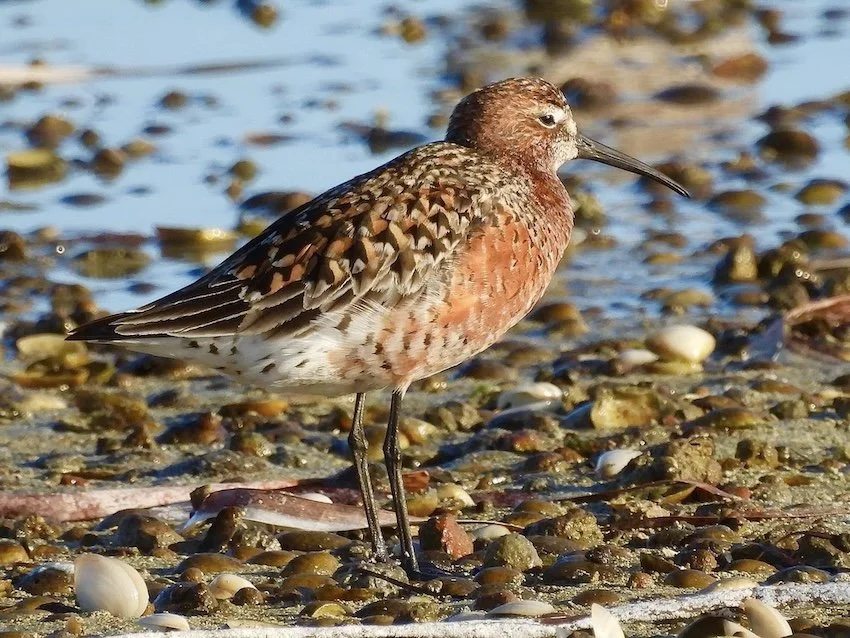
Curlew sandpiper in breeding plumage.
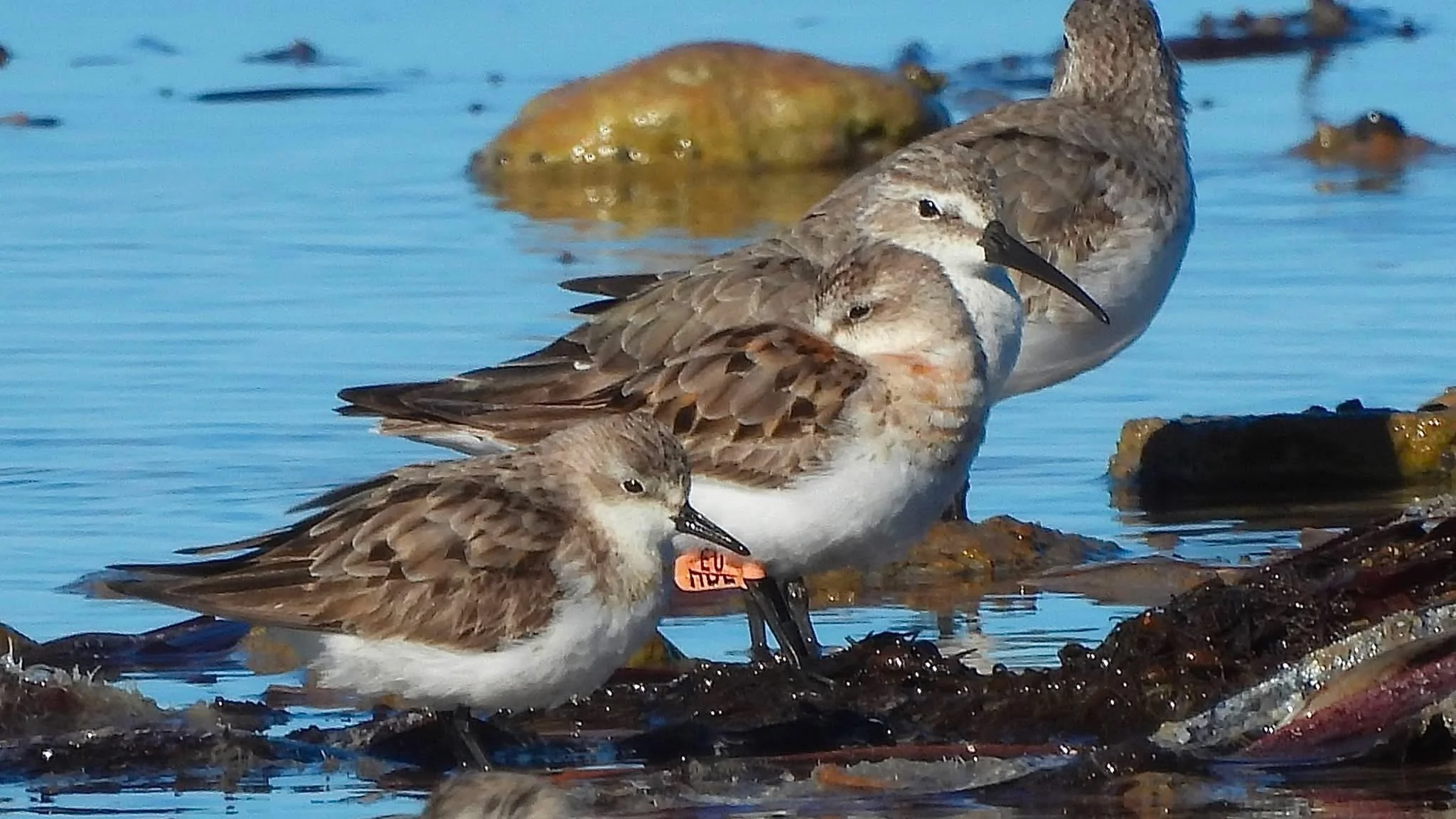
The two birds, front, are Red-necked stints, one with EU orange flag, banded in Victoria. Behind this bird is a Curlew sandpiper with HDL orange flag, also banded in Victoria. HDL regularly returns to the Adelaide International Bird Sanctuary.
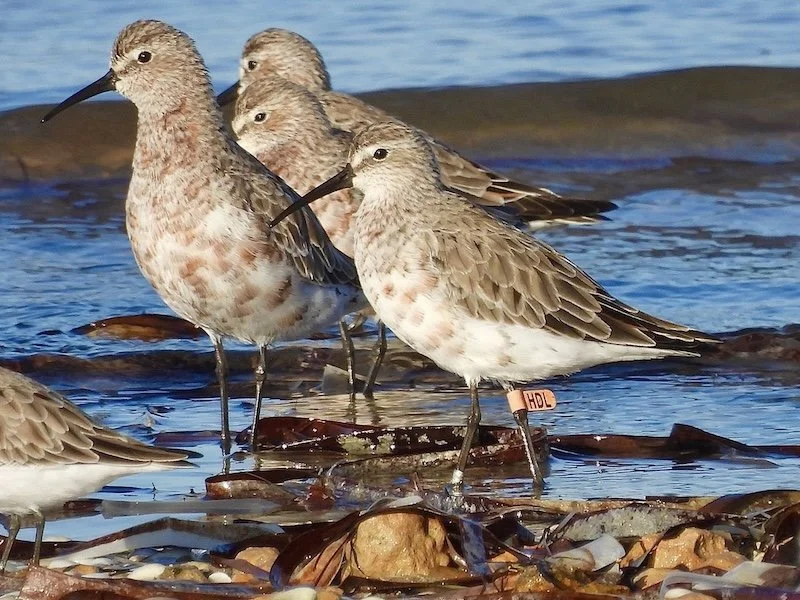
A relatively short bill on the curlew sandpiper on the left, possibly a male. Curlew sandpiper HDL, front, banded in March 2022, has been seen in our Gulf every summer since.
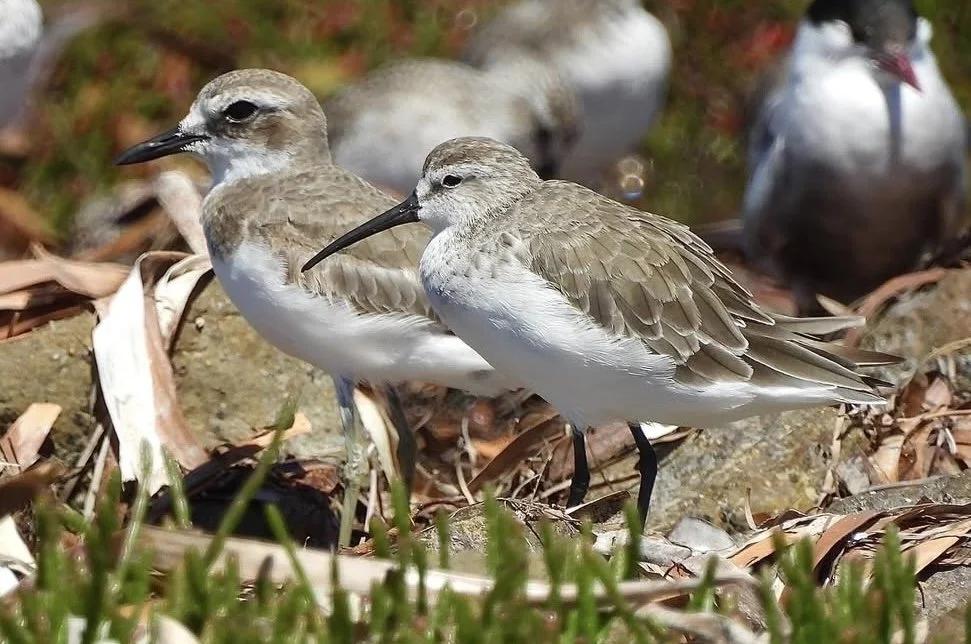
Curlew sandpiper, front, Greater sand plover, back, both in non-breeding plumage. While both birds are a similar colour and size, the head shape, eye and bill differ significantly. Also the leg colours differ, the Sand plover has green/ grey legs.
Photos and identification details - Paul Taylor
Graphics and words - Lucy Uppill