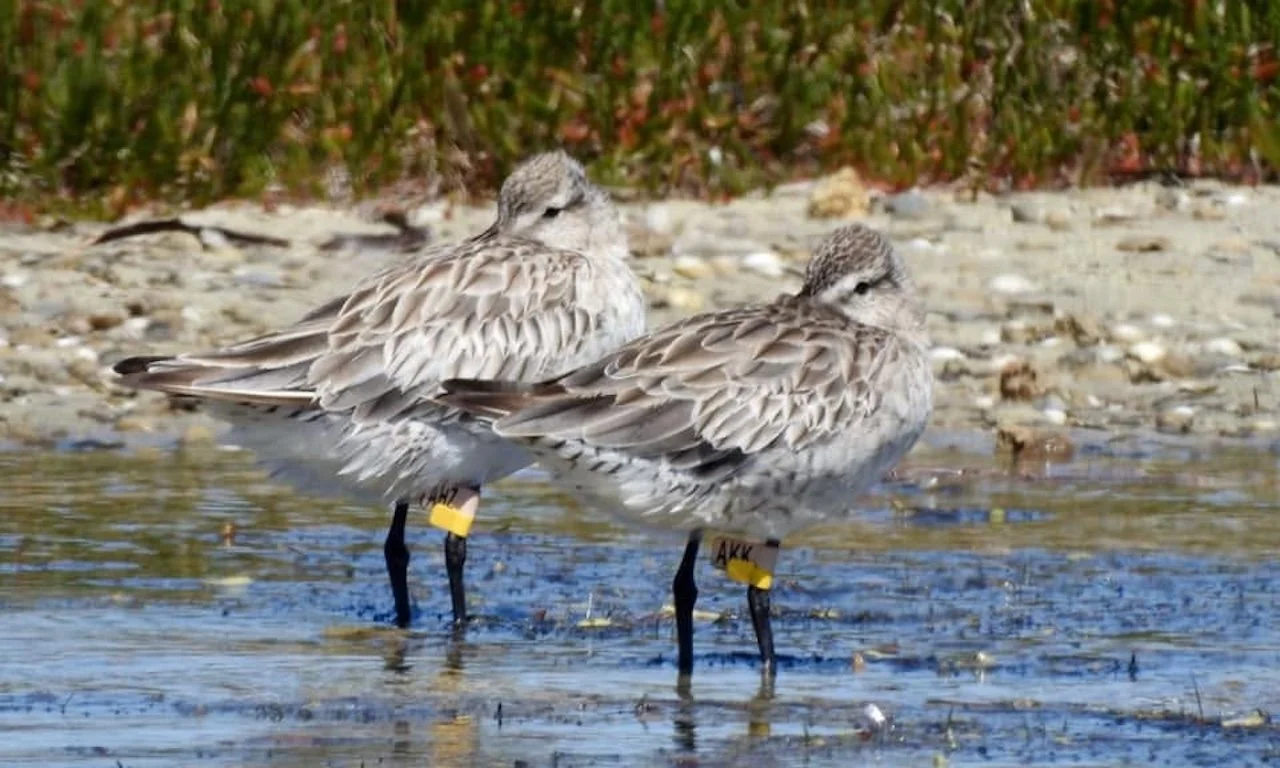
Seen a leg flag?
Many migratory shorebirds visiting the Adelaide International Bird Sanctuary carry coloured leg flags or bands. These markings help researchers track individual birds, without having to recapture them, and understand their journeys along the East Asian–Australasian Flyway.
Reporting leg flags helps scientists join the dots in discovering where migratory shorebirds rest, refuel, breed, their age and other critical data.
If you spot markings on a bird, don't approach it. Take photos, record the colours and position of the flags, and report your sighting.
What to record:
Bird species
Date and location
Where the flags are on the legs (left/ right/ both)
Colour and position of every band or flag (tibia/ tarsus)
Any letters or numbers
Photos, if possible
Every sighting helps scientists understand where these remarkable birds travel and which wetlands they need to survive. Report your sighting through BirdMark.
Please report information from metal bands to the Australian Bird and Bat-banding Scheme.
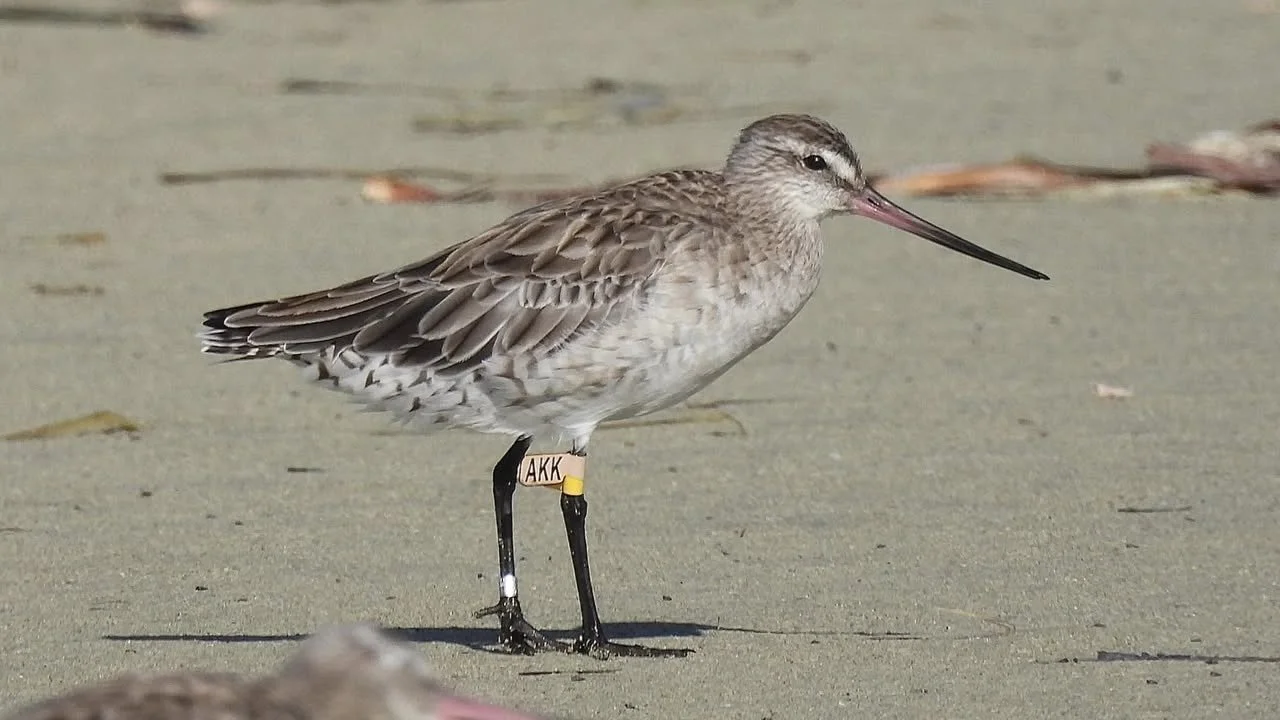
Meet AKK
The now-famous Bar-tailed Godwit, AKK, was banded at Thompson Beach in the Adelaide International Bird Sanctuary in November 2012. His orange-over-yellow leg flags identify him as being banded in South Australia. Based on the wear of his feathers at the time, he was already at least two years old.
AKK began returning to our shores each summer, and has been regularly sighted here as he rests and refuels for the next stage of his incredible journey.
He is believed to be the Alaskan-breeding subspecies of Bar-tailed Godwit, Limosa lapponica baueri. If so, AKK makes a staggering 30,000-kilometre round trip between South Australia and Alaska every year.
He has also been recorded at Bohai Bay in the Yellow Sea, an important stopover where he can refuel on his journey north.
The southward journey is even more extraordinary. Alaskan-breeding Bar-tailed Godwits can fly more than 11,000 kilometres non-stop across the Pacific Ocean, travelling from Alaska to Australia and New Zealand without stopping to feed or rest. Some individuals complete this extraordinary flight in around 8–11 days.