Red Knot (Calidris canutus)
calidris: grey-coloured waterside bird
canutus: named after King Canute
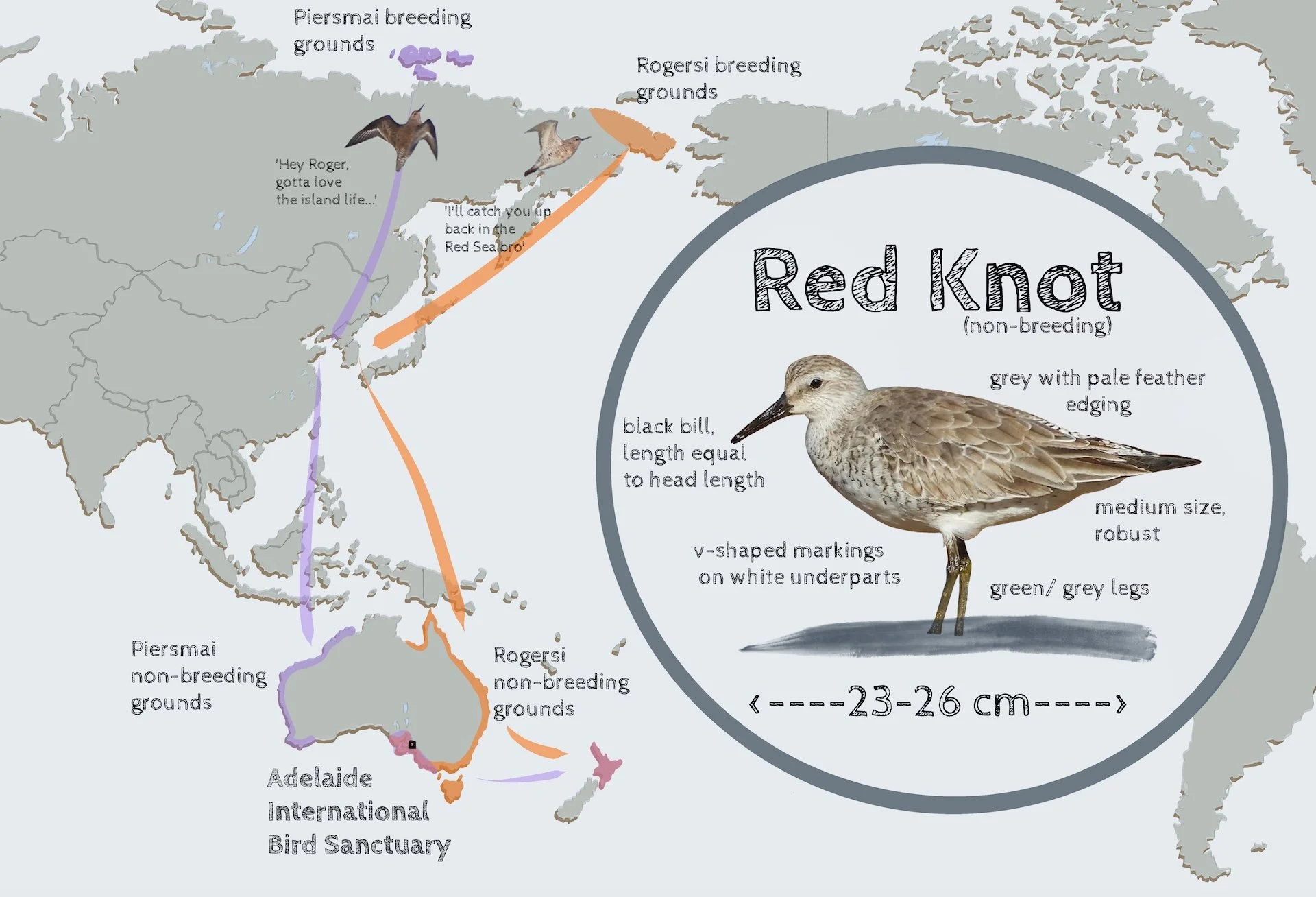
The Red Knot is a medium-sized migratory shorebird in the family Scolopacidae, measuring approximately 23–26 cm in length. It has a compact, robust body, relatively short, greenish-grey legs and a straight, moderately short black bill, approximately the length of its head.
In non-breeding plumage, the upperparts are grey with pale feather edges, while the underparts are predominantly white, with grey streaking across the head, neck and breast and distinctive dark chevron (v-shaped) markings on the flanks. During the breeding season, the plumage transforms, with rich chestnut-red underparts and intricately patterned upperparts.
Red Knots breed in the high Arctic and migrate south along the East Asian–Australasian Flyway to spend the non-breeding season in Australia. The Red Knot has two subspecies that are seen in the Adelaide International Bird Sanctuary, rogersi and piersmai. Rogersi breeds on the Chukotka Peninsula in far-eastern Russia and migrates to the eastern Australian coast, while piersmai breeds farther north on the New Siberian Islands and spends the southern hemisphere summer on the west coast of Australia.
In breeding plumage, rogersi typically has paler, peach-coloured underparts and silvery upperparts and is slightly larger in size whereas piersmai is more richly brick-red, with a darker nape and more boldly patterned upperparts. Outside the breeding season, the two are extremely difficult to distinguish visually.
Red knots inhabit sheltered coastal environments, particularly intertidal mudflats, sandflats, estuaries and sandy beaches, where they forage along the receding tide for marine invertebrates, especially bivalve molluscs, as well as worms and crustaceans. The Red Knot has a short, straight bill and a powerful muscular gizzard that enables it to crush hard-shelled prey, such as cockles, swallowed whole.
Conservation status:
Global (IUCN Red List): Near Threatened (NT)
Australia (EPBC Act): Vulnerable (VU)
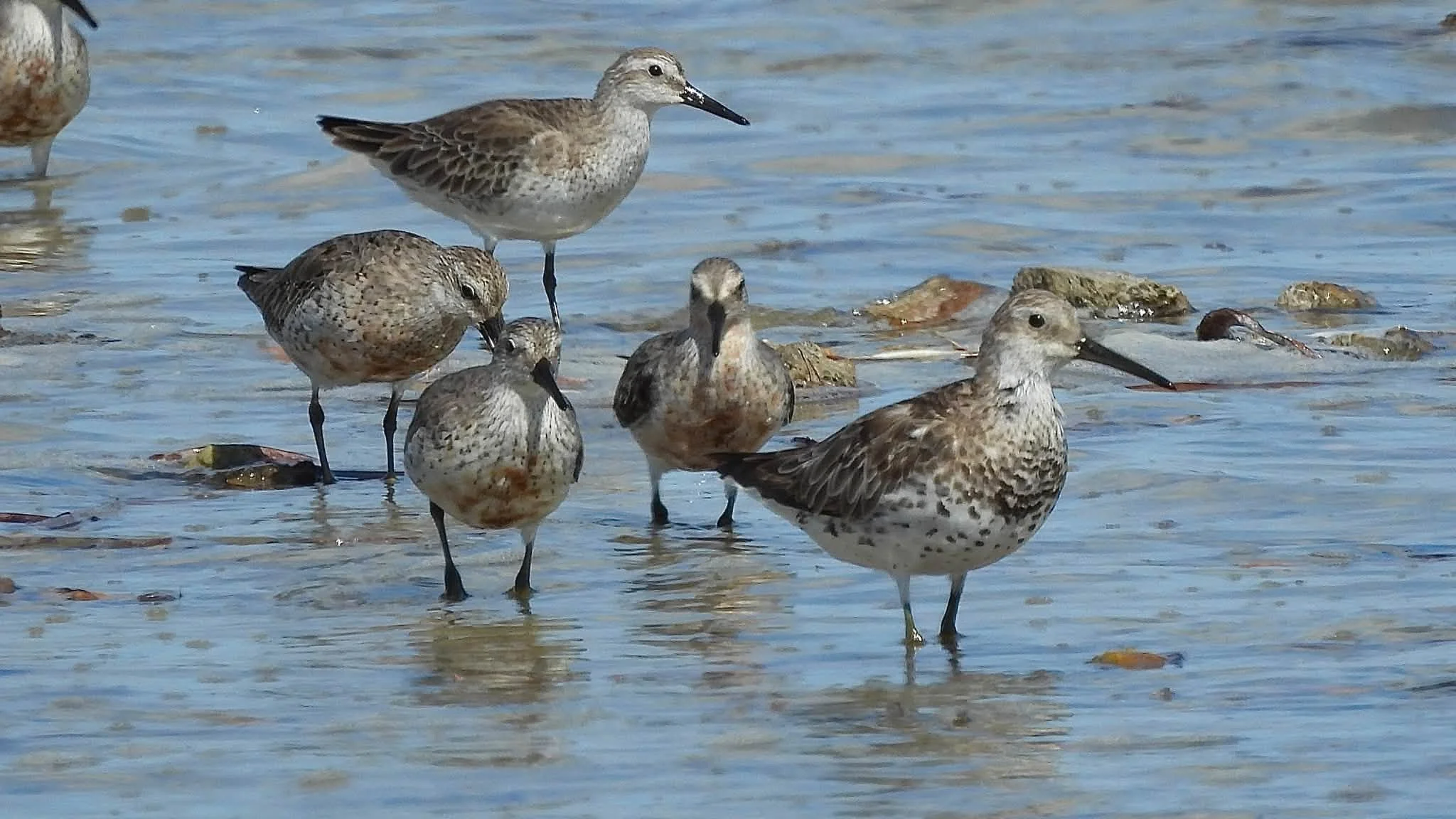
Great knot, front, has a longer bill, larger size and more extensive streaking and spotting on breast. The other four birds are Red knot.
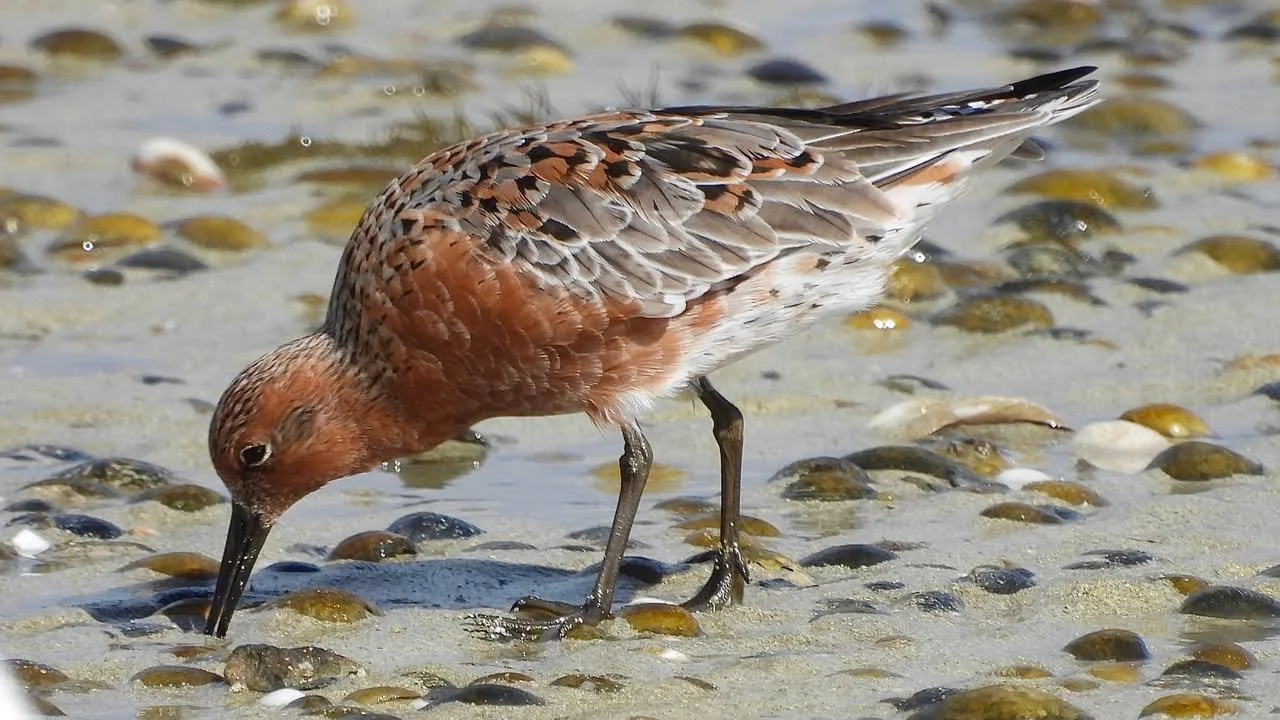
Red knot, breeding plumage, probably subspecies piersmai, has darker brick red colouring and more defined, darker markings to upper feathers. Piersmai spends non-breeding season predominantly on the west coast of Australia
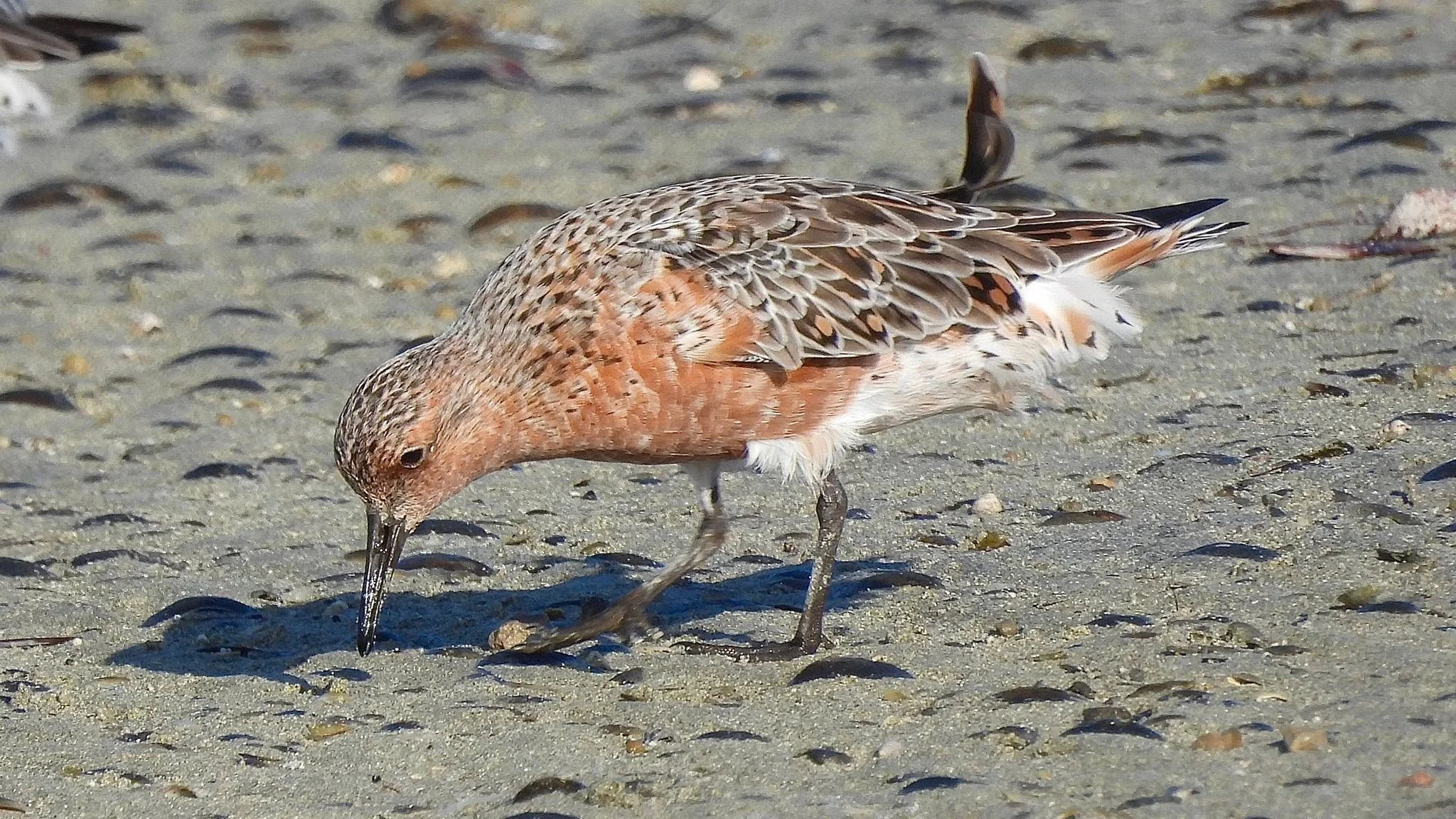
Red knot, breeding plumage, probably subspecies rogersi.
Rogersi is a paler peach colour with lighter silvery upperparts and is the slightly larger of the two supspecies found in the Adelaide International Bird Sanctuary. Ssp. rogersi is more common on the east coast of Australia.
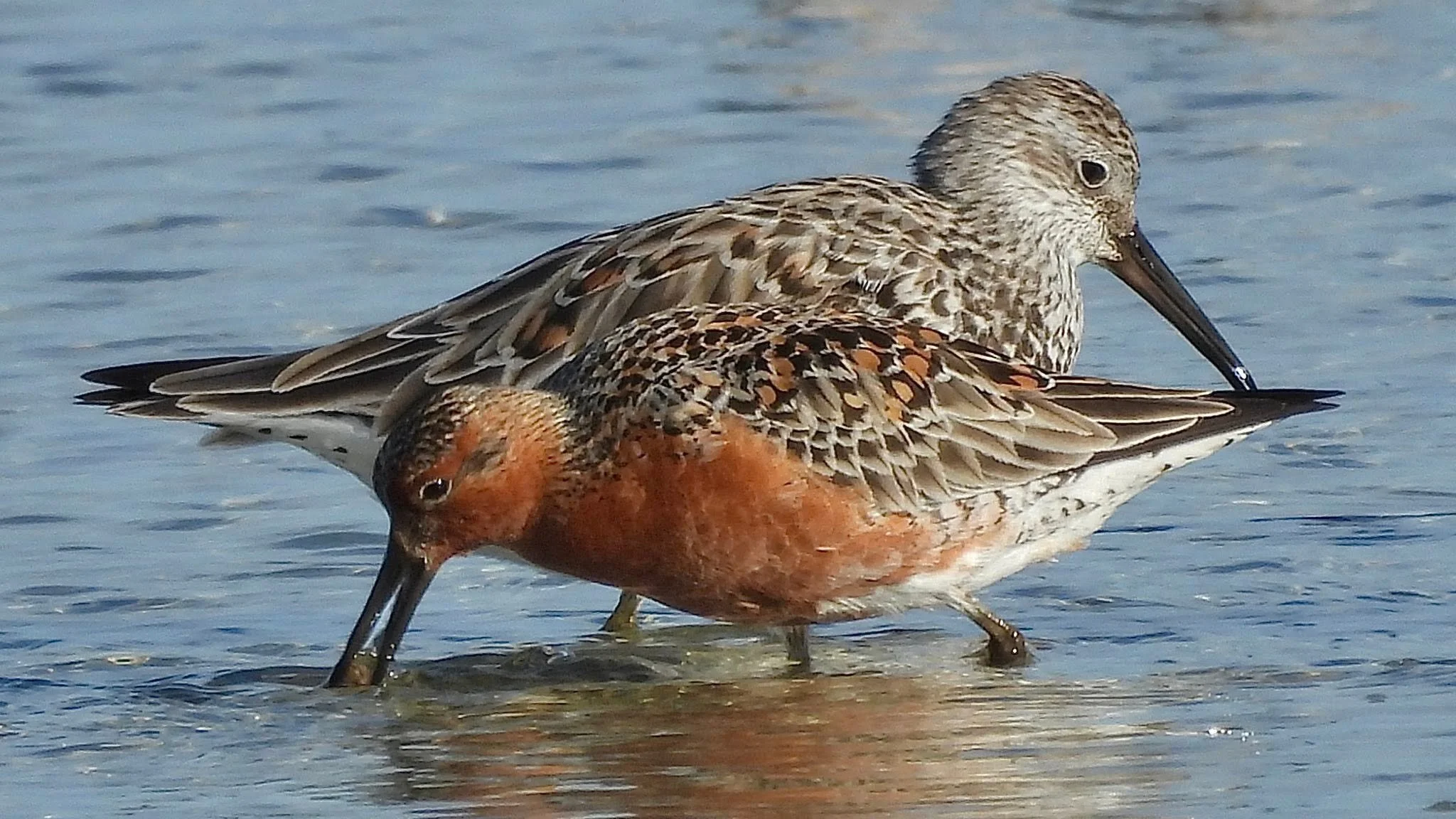
The size difference between the Great Knot, back, and Red knot, front.
The bill on the Great Knot is longer than the length of its head from base of bill to back (nape), on a red knot the bill is roughly the same length as the head.
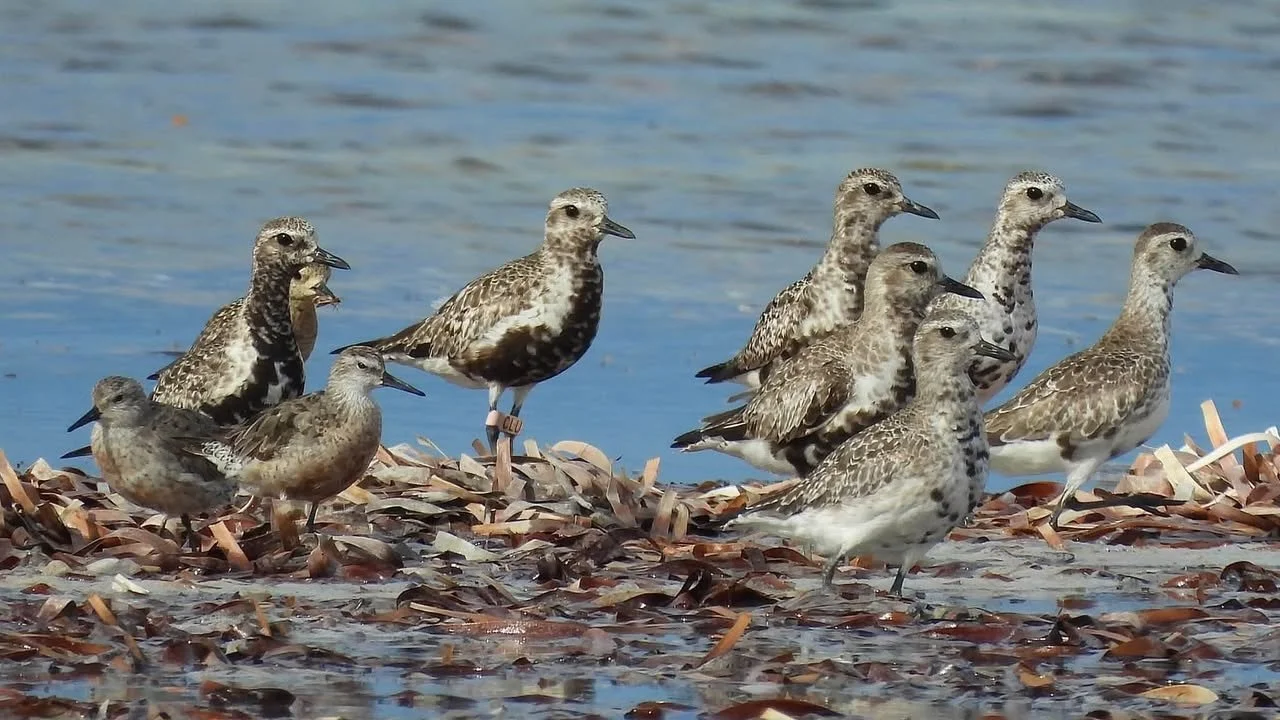
Two Red knots, front left, are quite a bit smaller than the seven grey plover and one Pacific golden plover (peeking out from behind the grey plover on the left).
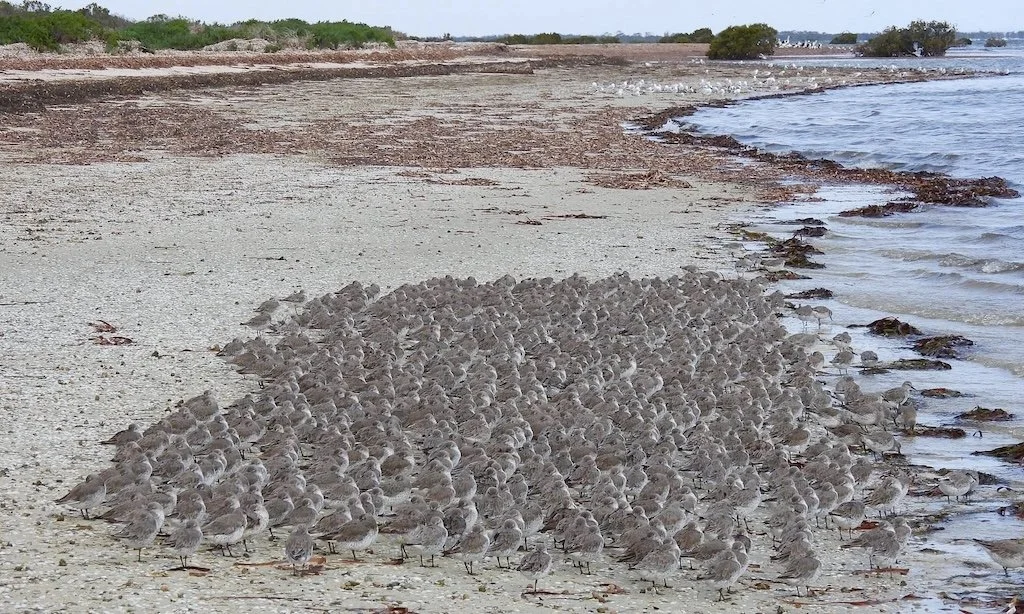
Red knots are highly gregarious, often forming dense flocks while roosting and feeding.
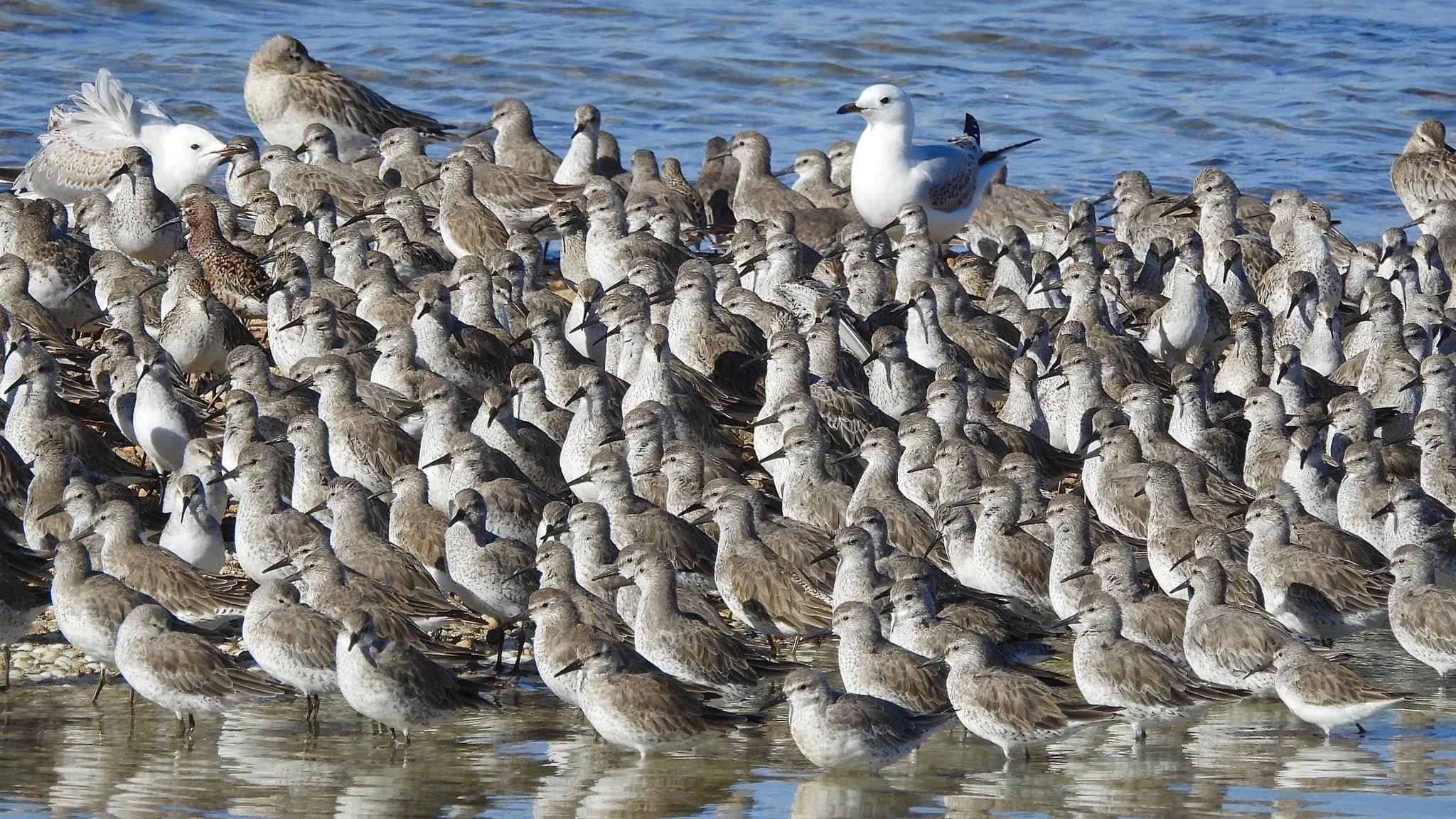
Now to test your skills, this flock is mostly Red Knot with some Great Knot, Curlew sandpipers, Sharp-tailed sandpipers, Bar-tailed godwits and Silver gulls.
Photos and identification details - Paul Taylor
Graphics and words - Lucy Uppill